Something Novel: Let’s Talk About Writing Books

After writing plays and documentaries, the word “novel” sounded pretentious to me. I just kept calling it a “book.” But now that I have finished my second novel, the word falls sweetly on my ears. In fact, being a novelist feels like the role of my lifetime.

How do you start? How do you change? How do you move from one form of writing to another? How do you bring characters, places, feelings to life? And how do you do this when the world we live in so often feels like it has fallen into a kind of chaos?

If you have any of these questions, rest assured that you’re a novelist, too.

I started out as a theatre artist—tap dancing, teaching jazz dance, writing and performing in plays in high school. Before I knew it, I had grown up, formed a theatre company, and become a playwright. I dropped the tapping and stepped off stage — but behind the curtain, the complexity of production was overwhelming for me. I got grants and co-productions at good theatres, found talented colleagues, but the play itself has demands: the characters need to be in a juxtaposition for conflict, drama, sex, comedy. I tried to say something in each play about our world. This is hard enough without getting an audience, convincing actors they don’t look bad in their costumes, and dealing with the press.

Eventually, I wanted to stop. I had done a play every two years, and in between wrote documentaries about the role of women around the world. I was tired. But I am a writer, and I had always been a storyteller. (As a little kid, I was the most popular at lunch break. Even people who didn’t like me would sit at my table while I ate and told a story I was making up as I chewed.)

So I decided to write a novel—to try and tell one of the stories I wanted to tell without all the complexity of production. And I wrote The Road Not Taken—a crazy, surreal tale about a 50-year-old female protagonist. Writing a novel allowed me to leave the real world behind and create a world I liked better. And there were no limits, no egos, no budgets, no logistical or contractual constraints, no costumes. I wrote a piece of pop culture—with time travel, mythological creatures, dead painters come back to life. 

I was lucky to have a publisher willing to put it into the world. And I was extra lucky to find two people who helped me bring the book forward to the public. The whole experience was so easy compared to herding actors, begging for audiences, and watching people change my dialogue every night. My novel characters said exactly what I wrote, every time I read the page. None complained to me about their role, their costume, or another actor. I was in my own subconscious mind with a bunch of characters who liked me enough to tell the story for me.

I am not a suffering writer. The process for The Road was mostly pleasure: First, I thought a lot about what to write, dreaming up plot twists and people. Then I gave myself notes (that I never referred to again) and finally found the story.

Here’s why I believe in spells, and charms, and everything metaphysical about art: inside of me, and I think inside of everybody, there are stories, or songs, or paintings. Inside all of us is the unconscious stuff begging to be shared. It is a sheer joy to know that when I do the set-up of the main characters, and the main story line, I can sit at my computer and go into a spell. Sometimes when I read what I wrote the day before I cannot recognize the words. They come from very deep inside me, and I can’t just access them, they have to show up.

November is National Novel Writing Month—and I want to encourage anyone reading this to take the dive and commit to it if you feel at all tempted. If you ever want to write a novel, you will find your own way. As November rolls on, I will continue to talk about my process in the hopes that it will give people ways to look at their own process. Or ways to look at my process and laugh! 

If you have questions for me about writing, getting published, and weaving words—bring them on! Leave questions for me in the comments here, on Instagram, or even on Twitter and I’ll try to answer them while you’re busy putting the pencil to the page! (Or the pen to the page. Or the finger to the keys.)

It has been such a delight sharing my first novel with the world. And I can’t wait to share my next with you. And while I tinker with my own draft—go write a novel I can read, please!

Reckoning With—and Rewriting—Beat History

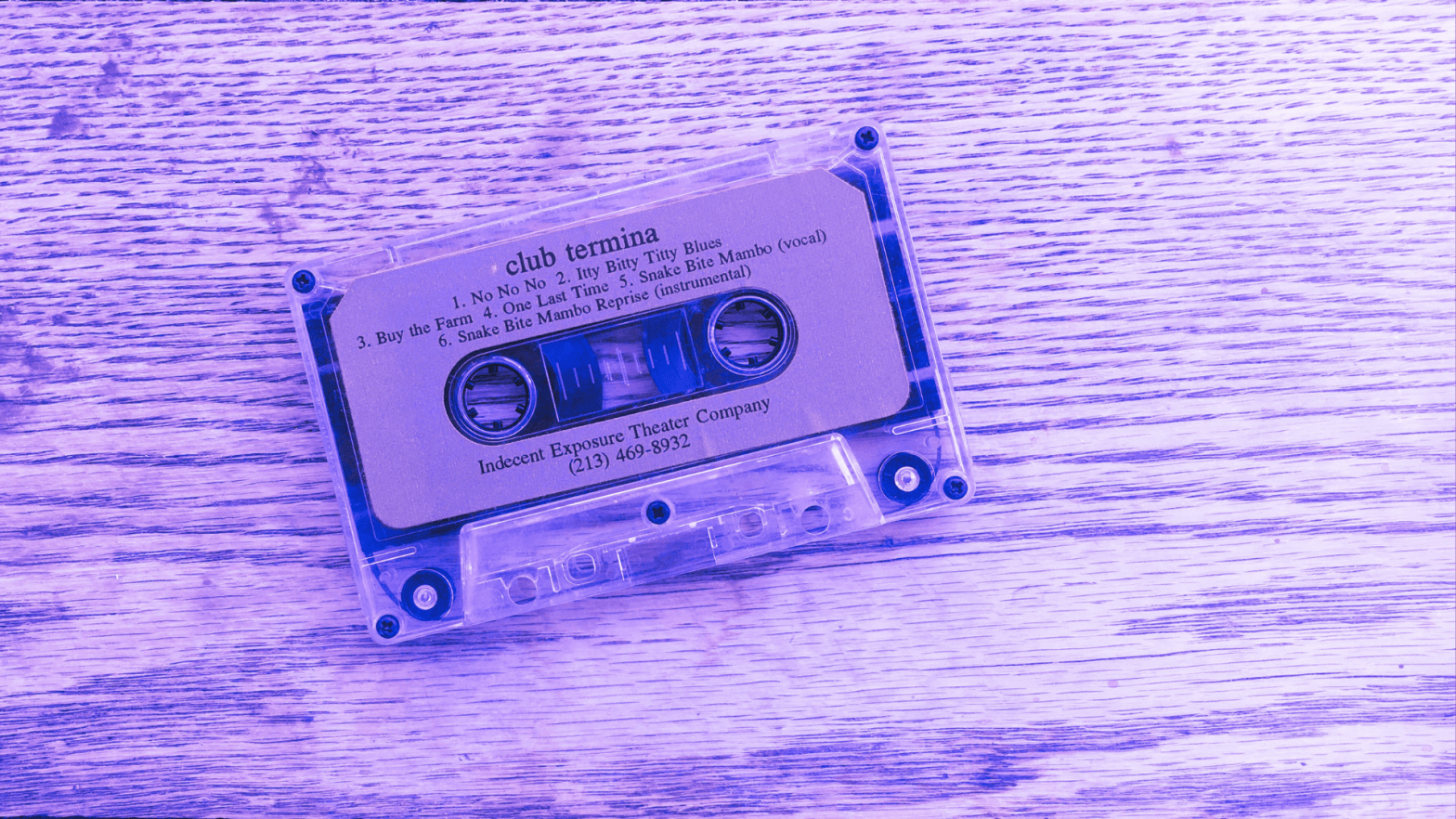
I’ve spent much of October marking Breast Cancer Awareness Month with stories of my own history with it—my diagnosis, my grief, and how the play I wrote about the experience, “club termina,” would change the rest of my life

But October is a busy month that also marks the collision of LGBTQ History Month and Domestic Violence Awareness Month. And this year, they both arrive as I’m reckoning with the history of homophobia and intimate partner violence in my new writing project.

“The history of LGBTQ+ communities is a history of pain and violence – state violence, hate violence, gender-based violence, and yes, domestic violence,” Jimmy Meagher wrote to mark DV Awareness Month in 2019. “But it is also a history of pride, beauty, and resilience. A lot has changed over the decades, but the LGBTQ+ family continues to fight for equality, safety, and security for all. Our transgender, gender non-conforming, and non-binary siblings, especially trans folks of color, face violence from outside the community and from within.”

Indeed—and that history, especially the commonality of DV in and beyond the LGBTQ community, persists. The original Violence Against Women Act was the first to acknowledge domestic violence and sexual assault as federal crimes —whether the acts were committed by strangers, relatives or spouses—and it took until 1994 for that to happen. Now, in 2021, we’re still fighting to see it re-authorized, despite knowing that 1 in 3 women and 1 in 4 men have experienced physical violence in a relationship, and three women are killed each day by a male partner. 

I’m frustrated by this slow march to progress. This is an issue I’ve seen folks organizing and working around throughout my years as feminist—but we still live in a culture that normalizes and even celebrates violent and abusive behavior.

Lately, we’ve seen many overdue reckonings, especially in Hollywood—where long-lionized men are being exposed as abusers, perpetrators, and creeps. My next book is part of these corrections to the pop culture record—a fictional exploration of the very real ways in which anti-gay and domestic violence shaped the beat movement.

My next novel is a semi-autobiographical piece that includes four members of the Beat poet community: Lucien Carr, Jack Kerouac, Williams Burroughs, and Allen Ginsberg. Two were LGBTQ. Two were confessed murderers. Carr killed his mentor and sometimes sexual partner, David Kammerer. Burroughs killed his wife. 

And the penalties? Carr got off with “Honor Killing”—because it was in the 1940’s, and the law said anybody who felt a gay person was coming on to them could use whatever force necessary to stop the attack. Burroughs shot his wife Ann Vollmer dead in a bar playing a drunken game of “William Tell,” which she agreed to, and after his defense attorney committed a felony and disappeared, no further charges were ever brought against him.

I was shocked when I came to recognize, only in the last few years, how this history was woven into my own life as someone who lived in proximity to one of these men in her younger years. (To find out more of those details, you’ll have to buy the book!) It is truly jarring to recognize the ways in which these acts of violence can be swept under the rug, and how little attention we pay to them in the moment or in the years after.

It is on all of us to do everything we can to call out and end this violence. We know that storytelling can be an incredible tool for accountability and justice—if nothing else, the #MeToo movement showed us that. And so here I go again, writing what needs to be said—and hoping it speeds up that march toward a better future.

How Creating “club termina” Taught Me the Power of Sharing My Story

I was shocked by the depth of peoples’ responses “club termina,” the musical I wrote in the wake of my own diagnosis with breast cancer—and to process the grief I felt when I survived, and my friends did not.

You could feel it build as the women performed. Audiences got transported to this strange club, suspended in disbelief, rooting for everybody to survive. But when the character Secret, written in homage to my late friend Sigrid, did her monologue, people realized they weren’t going to get a happy ending.

“I laughed about it with all my friends,” Secret explains. “I didn’t want to freak anybody out. Besides, I knew I was going to survive. I could feel it in my bones! But really, from the first cell that broke loose and spelled c-a-n-c-e-r, I was d-e-a-d.” Her character was so optimistic that the audience hung on to her hoping the play would come to a jolly conclusion.

When Secret was called to her next existence, when she stopped speaking, you could feel the audience accepting the finality of her life, and somebody would run out of the theatre, gasping or sobbing. 

The first few times I assumed they had left—so overwhelmed or upset that they had run from the story I was sharing. But each time, I would find them waiting in the lobby after closing, waiting to talk to me. Each time, they would tell me that the story gave them a new way to think of death—as a new chapter in the ongoing existence of our spirits. “club termina” hadn’t just channeled the terror, grief, and pain of my diagnosis and those of other women—it had helped all of us, together, realize that “terminal” didn’t mean end of the line.

After “club termina” wrapped, I sat down in a different kind of room to hear different kinds of stories: I taught workshops at the Wellness Community, a cancer support workshop for those with terminal diagnoses. Everyone in the group was going to die, and week to week, we lost some of the voices within our small community. Trying to get these women to write about their experiences never worked: the women needed to talk. They wanted to sit with me, with each other, and tell the truth about their fears, their anger, their cancer. I could relate—because finally telling my story had provided me with much-needed healing.

The last hurrah for “club termina” had been a series of concert readings in different cities. When we were in LA, my oncologist did a Q and A afterward. Women in the audience asked about a symptom they were afraid of, a lump they had felt. Watching that happen, I realized storytelling was the most important gift I could offer.  

Putting a show together is difficult. In the old days, a play meant that an audience had to show up at a specific place at a specific time. A live show was always filled with the excitement and nerves that come with hoping each actor and tech person will get to the theatre safely and on time. In Los Angeles, it also means hoping the actor doesn’t get a commercial or gig that shoots during performance time.  Assuming the best, by Half Hour, all are in costume, or behind the light board, and the next step is magic.

Then the show opens and immediately creates a community—people watching a story together, sharing something that happens once and then disappears into space.

I never knew if those women who waited in the wings for me were cancer survivors or patients or just those who had felt the loss and fear of a loved one’s diagnosis. We didn’t need to explain ourselves to each other in order to keep talking to one another.

What we had shared in the theater had bonded and healed us both.

One Last Time

I believe in many forms of medicine: plant, Western, ayervedic. But the best medicine is art. It takes me right down inside the deepest parts of myself. It allows my subconscious to surface.

After I battled breast cancer in my thirties, I created a musical play about the subject, “club termina.” I had lost a girlfriend to breast cancer, and I needed to speak for my friend who could no longer speak for herself. Sigrid watched as my cancer got “cured.” As I was given a better prognosis, Sigrid’s got more dire. I was caught between relief and a terrible, deep sorrow. I had no place to go that I wasn’t surrounded by grief and confusion after Sigrid died.  

That’s when I made this piece of theatre. I needed this medicine—because we had both expected to survive, and that’s not what happened. “club termina” would give me the chance to bring my lost friend back onstage for two hours a night.

I wrote and produced the play, which takes place in a nightclub in the clouds where all the characters—each of whom struggled with breast cancer—are in transition from a life they just ended, and the existence they will move on to. Putting a show together is always difficult, and always filled with excitement and nerves. But this experience was magnified because of how close the material was to my heart.

We started the piece in semi-darkness, with ambient sounds of an operating room as my character—the one woman who would survive—was going under anaesthesia for surgery. The audience suddenly heard heart monitors, surgery machines, and somebody counting down: 100, 99, 98, 97. Then the lights started shining, and we were in our nightclub.

There was a bar and four women, all dead but very alive. The bar kept everybody lubed for the hard stuff in the stories. More important than the booze, a lot of the most difficult parts got told through ribald musical numbers. The music was a big part of why this nightclub, filled with women who had died of breast cancer, was a healing experience. I’m not a composer, but writing the songs in this play allowed me to tell the very sad stories I wanted to bring to life without becoming lost in my own grief one more time.

You can say a lot about breast cancer in song that would otherwise be strange as dialogue. I wrote songs about begging for more time to live, seeing a dead body on the floor and realizing it was your own. These were rock ‘n’ roll, nothing operatic or morbid. Writing them, and then hearing them sung to music during rehearsal, lifted some of my own grief by helping me to explore what I’d been through and seek out light to mark the end of that tunnel. 

The “Itty Bitty Titty Blues” described a young woman’s desire to develop breasts, so she can feel like a woman. In the chorus I wrote lyrics to say something I had felt myself: My breasts have betrayed me / Yeah, they’ve broken my heart. All cancer is crazy and scary, of course—but for me, cancer in my breast felt like incredible cosmic betrayal. I liked my breasts! We had enjoyed things together!

The play ended with the character who had been in surgery coming back from her subconscious mind. She’s me, remember. And she is alone in the nightclub. The other women have moved on. 

She is, as she says in the closing song, “One Last Time,” condemned to live all by myself.

Follow me on Instagram to hear more from “club termina” each Thursday in October.

When I wrote “club termina,” I felt like the world was full of strangers. I felt like nobody could understand what it felt like to be so young and have a doctor talk to you about survival. I felt like no one could possibly fathom the depth of what I had lost when Sigrid died and I survived.

In my last phone call with Sigrid, when she was tired of fighting for her life and losing, I asked how her cats were. She told me they didn’t matter anymore. 

We closed the show with that song because that was what I wanted from my friend: One last time.

From Terror to club termina

It’s October, and Breast Cancer Awareness Month. And as a survivor, I have a lot to say about it.

I was in my thirties when I realized I was genetically disposed to this disease. My mother had it, and she had taken massive hormones to give birth to me. At 33, I asked my doctor for a mammogram, but I was told: I wasn’t old enough—not just for the x-ray, not to get Breast Cancer.

The doctor told me to palpate my breasts every month instead to find any unwanted visitors in them. (Rough translation: I had to rub my hand in circles over my breast with one arm over my head). 

It was too scary. I went back to the doctor and every three months, he did the heavy lifting for me. 

One day, with his hand on my right breast, he said: “Oh.” Terror. That’s the word that will cover the rest of this. That’s immediately what I felt. 

Terror: A needle biopsy that found a benign cyst on top of a malignancy. I told myself the cyst had come to help me—after all, it was what the doctor noticed while the tumor was too small, but young like me, and in good shape. 

Terror: One scan before surgery. I tried to talk to the nurses so they would tell me that I was okay. They can’t do that.

Terror: The biopsy results. Setting up surgery and radiation. Being in my thirties and thankful that there was no chemo.

Terror: A new chemo is developed that’s not yet FDA approved but looks like a sure fire cure, which sounds so sweet compared to “remission.”

Terror: Things did not go as well for two of my girlfriends, Bessie and Sigrid, who were diagnosed when I was. Neither of them would survive.

When I lost them, terror turned to something I cannot describe—but trust me, terror was better. I went to the funerals. I found a way to cry for them every day. But I was lost. The world felt like the wrong planet for me. Then a friend suggested I go to a Writer’s Bootcamp that changed my life.

I starting writing about the terror and worse. I wrote a piece, “Life and Death: The Vaudeville Show,” for my class. Los Angeles Theater Center (LATC) went on to produce it. We had a full band, and two characters, you can guess who they were—and we toured Cuba as part of an event dedicated to stories of death, where the audiences stood and hollered after every performance. The stage had open flames at the edge instead of lights. I wondered if the cheering was because I had not caught fire during “Live and Let Live” my solo in the show. 

On the flight home, I envisioned a musical about women who had died of breast cancer and were sent to a nightclub in the sky. “club termina” was my chance to honor Sigrid and Bessie with characters who performed their stories. The piece was full of humor, dotted with bawdy musical numbers. There’s no other way to get through it, in my mind. But still every night, somebody left the theatre barely containing their sobs as they ran out.

Before that diagnosis, before the terror, before what was worse, I thought I wanted to be an actress. I had come to Los Angeles to find my way to the stage, to the screen—but then cancer showed me the power of shared stories, the power of what I had survived, the power of talking about something so many of us struggle with in silence. 

My diagnosis spun my entire life around. And “club termina” led me to all that came next—to co-founding a theatre company and writing and producing plays that expanded the canon of stories that women could see, hear, and tell; to feminist documentaries and essays and webseries; to The Road Not Taken, and to learning to walk it in my own life. 

I have been telling stories—the stories I lived and the stories I longed for—ever since. Because life is too short not to.

When the Doctor Calls on Yom Kippur

I wrote CLUB TERMINA in the wake of my diagnosis.

Yom Kippur begins tonight and continues through sundown tomorrow. Atoning, re-thinking, contemplating, are all part of what some Jews do this day, as well as naming our dead loved ones lost in the preceding year so their names can be entered in the Book of the Dead.

And sometimes, I spend Yom Kippur remembering the night I realized I had cancer.

When I was in my thirties, I found a lump in my breast on Rosh Hashanah, the Jewish New Year—and an occasion usually filled with great joy, I was scared. The lump did not seem like an auspicious New Year’s gift, so I ran to a surgeon, he said the lump was benign. But to be sure, he would do a needle biopsy. Needless to say, the year was looking bleaker by the second.

The biopsy was quick, and painful, but the surgeon was more certain than ever that he had taken care of my problem.  His office would call me when the labs were in, but he told me he knew a lump when he saw one.

When he called one day before Yom Kippur, I knew I’d discovered one he couldn’t spot.

Doctors don’t give good news in person on the eve of Yom Kippur.

I was really scared.

,The next day I waited for 4 hours as he performed his miracles on somebody else. By 5 pm, I knew I had cancer. He showed up frantic from his day of scalpel swinging and waved a brochure at me. “Great news!” he declared to me, a woman in—in case you forgot—my thirties. “You can get a lumpectomy instead of a mastectomy.”

When I asked if that meant I had cancer, he stared at me. The lumpectomy was good news! They treated the cancer aggressively—surgery followed by chemotherapy and radiation.

Forgive me for remembering that it wasn’t good news to me—even though 30 years later, I am here, writing this. I do not mean to sound ungrateful. That diagnosis opened up a lot in my life, but the collision of this Jewish holiday and October’s Breast Cancer Awareness campaigns also reminds me of the challenges it presented, and the losses I knew that day in his office I could face.

My advice? Contemplate away today.

But don’t call your doctor.

Mapping the Road Not Taken: Partying Across Time and Space

My book, The Road Not Taken, poses many “magical questions”—and I’m going to begin digging even deeper into the historic and mythical underpinnings in its pages, here and on social media @SusanRubin1 on Twitter and @SusanRubinWriter on Instagram, in a new series: Mapping the Road Not Taken. Together, we’ll travel through the pages of my book—and at every stop, I’m going to ask you to answer a magical question. Leave your response in the comments here or on social media.


Note to Self: Always practice what you preach. 

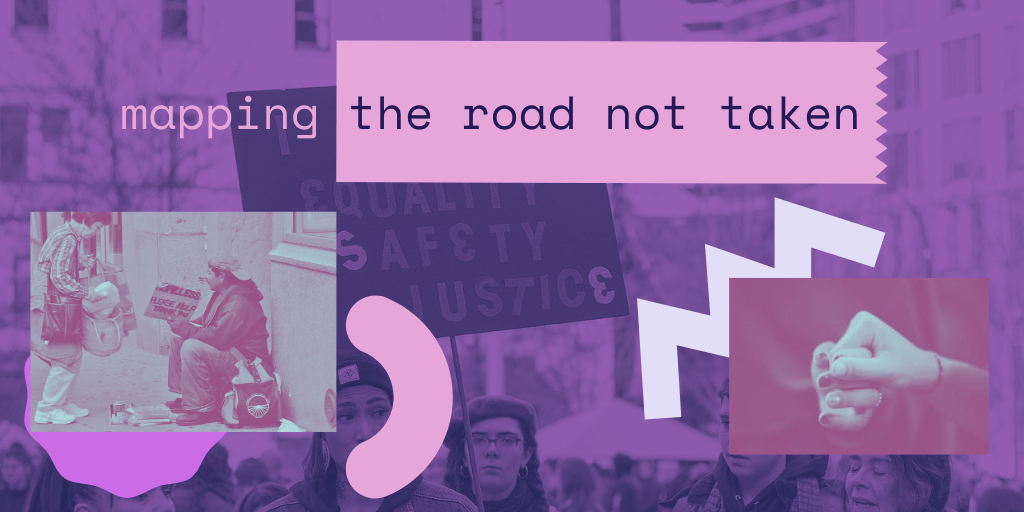
For the holidays, I have been imagining the kind of party Deborah, the protagonist in my novel The Road Not Taken, would throw to celebrate. In the book, Deborah finds herself at a soiree featuring people from across history, most notably women artists long erased by the men who had dominated their world.

I think Deborah’s festivus would go a little like this:

Deborah decides to spend one rotation of the earth creating comfort for every living thing she comes in contact with. 

She takes her friend, and often lover, Tim Carbone with her. Tim being immortal, can grab anything they need out of thin air. They will circle the world looking for people and animals in need – giving food to the hungry, medicine to the sick, and a sense of caring to those forgotten creatures who nobody cares about.

From Manhattan they travel through the air to the South Bronx to a homeless encampment in the snow. The tents and cardboard boxes that take the place of a warm home are blocks long. Inside each ineffective enclosure that provides no warmth or shelter from wind, rain, or snow, the inhabitants range from newly unemployed, still looking much like anybody else on the wintry street, to the ragtag tents and boxes of the long time homeless who have dropped off the face of the earth as far as the earth is concerned.

There are dogs and cats living in these so-called shelters. Tim grabs huge bags of dog and cat kibble out of the air, along with chew toys, cat nip, and bags of litter with boxes to hold it. Human food is handed out, along with soap, blankets, toilet paper, clean water.

There is little point in describing the shock, awe, gratitude, anger and fear they encounter as they “knock” on each home. A puppy licks Deborah’s hand, a cat tries to crawl up Tim’s pant leg. The people are less able to relate to them but many smile and nod.  They move on to townships in Africa, Asia, South America, every place where little villages of people exist with nothing to eat being their daily reality. People with terrible sores on their bodies, their teeth destroyed, their hair, no longer human hair. 

They continue for a full 24 hour rotation, giving food, and solace. They finish in a village in Brazil. Here they are shot at by police until Tim takes one of their guns, break it in half, and hands it back to the terrified cop. In addition to the nourishment, they hope to give a message: humans are awakening to the need to end homelessness and poverty.

This brings me to this week’s magical question:

If you could go anywhere and invite anyone—dead or alive, mythological or mortal—what would your holiday celebration look like this year? (Pandemic be damned.)

Happy Holidays to everybody who is lonely, hungry, sick, grieving, hopeless. We will make this a better world. Or we will end the world completely.

Mapping the Road Not Taken: The Higgs Boson Particle & the Future of Womankind

My book, The Road Not Taken, poses many “magical questions”—and I’m going to begin digging even deeper into the historic and mythical underpinnings in its pages, here and on social media @SusanRubin1 on Twitter and @SusanRubinWriter on Instagram, in a new series: Mapping the Road Not Taken. Together, we’ll travel through the pages of my book—and at every stop, I’m going to ask you to answer a magical question. Leave your response in the comments here or on social media.


Note to self: you are angry. Say what you need to say. But remember you have lived through 5 years of human depravity, cowardice, and stupidity.

In my book The Road Not Taken, the protagonist’s arc ends when she gives “an argument” for or against keeping the earth functioning. The founders of the planet check in with one human being every thousand years to see what a smart person assesses as the worth of their species. 

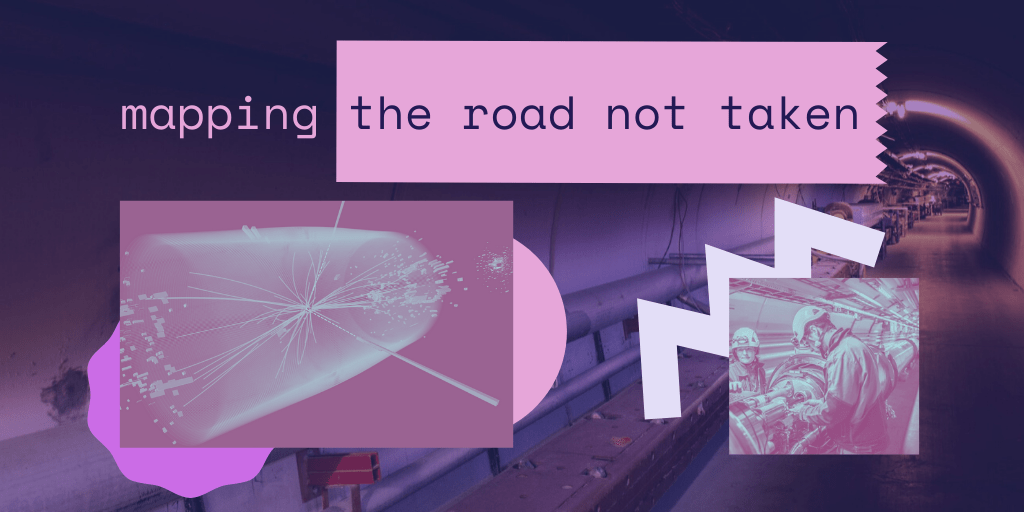
The earth is energy intensive, and there are many other planets and universes: In The Road Not Taken, our planet is up for judgment. The original inhabitants of earth, known as the Lost, keep tabs and can bring in the Boson Particle to end a failing planet or whole solar system. 

Having created Deborah, the protagonist, she became independent of me, acting and speaking in ways I found shocking. I refuse to be one of those authors who fly around their characters with dictates and assumptions: I want to let them teach me something. 

My woman makes a “closing argument” that favors saving the earth with the caveat that human beings can become less cruel. Forgive me while I take a moment to laugh. 

I think her opinion is piffle. If my species could be less cruel, why has it become crueler? As fun as it is to blame one person, or his followers, the human race allowed him to function, we allowed him to live. I am against Capital Punishment, but I am enthusiastically in favor of self- defense, that means not ignoring a toxic, crazy person and his followers who function with reptilian brains.

Many of us have spent 5 years in suicidal dismay over the ugliness (“I’ll put this tiger in a cage, you give me money, and you can shoot it. We’ll drag out its carcass and pretend you risked your life.”). Now the whole planet is at fatal risk from a virus. For some, not wearing a mask is a statement of freedom. For me, not wanting to be safe simply means your penis is too little. As for their women, they are unfathomable to me. 

We are plagued with disease, and millions cannot draw the line between our rape of mother earth, and her revenge in the form of a lethal virus: “It’s just like the flu.” Wrong. “It’s a hoax.” Wrong. “Hillary Clinton is a cannibal.” Must I comment?

If I made a closing argument, I would bring in the Higgs Boson particle—the “God Particle,” which in a billionth of a billionth of a second would take out our planet. No pain. No fear. No sorrow for the young creatures who will never have a life. Just an end to this blithering brutality.

Maybe I’m wrong. Which brings me to today’s question:

What hopes do you have for the future? What changes do you truly believe are on the way?

This election brought out more people than ever, people overwhelmingly against this regime of the reptiles. Maybe my character saw that coming. I can get so angry at injustice and cruelty, that I am as blind as a newborn kitten. And not as cute. Perhaps you can help me regain some optimism.

Mapping the Road Not Taken: Becoming Deborah

My book, The Road Not Taken, poses many “magical questions”—and I’m going to begin digging even deeper into the historic and mythical underpinnings in its pages, here and on social media @SusanRubin1 on Twitter and @SusanRubinWriter on Instagram, in a new series: Mapping the Road Not Taken. Together, we’ll travel through the pages of my book—and at every stop, I’m going to ask you to answer a magical question. Leave your response in the comments here or on social media.


Note to Self: some people suffer from a lack of guidance growing up. Some people suffer from a set of guidelines that are way too rigid. My childhood had some of both.

This and Greenwich Village are two of the only things I share with the protagonist of my new book, The Road Not Taken. I don’t give the character any name at the start of the story, and I never give any names to her family.

The absence of names means something, but damned if I know what.

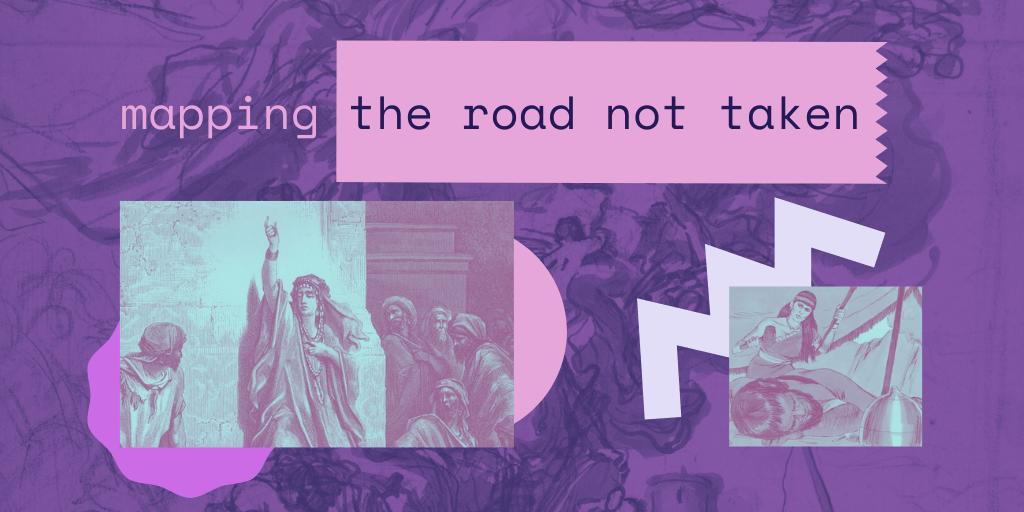
Early in the character’s relationship with her mentor, she is given another name: Deborah. There are no instructions to go with the new name, but Deborah finds a smidgen about herself in the Old Testament. Five lines. What I learned from the five measly biblical lines was that Deborah was a prophet, a judge and a warrior. You’d think that would earn her some ink, but you’d be wrong.

In spite of this, my character is fascinated by how a native New Yorker, used to a deadly but typical life as a wife and mommy, could morph into a judge, a prophet and a warrior. The story in the book lets her do that. First, she is given guides and taken on fantastic trips through Time and Space, and she learns about Weimar Germany on the cusp of Hitler’s rise. (For me, this is the freest women have ever been, and the Nazis took it away from them quicker than you can say “kitchen, children, church.” Which is exactly what the Nazis said to establish the Fatherland and destroy the movement of free people that included women, artists, LGBTQ people.)

In her travel back to 1933 Weimar, Deborah kills a Brown Shirt. She has never used a weapon other than to carve a turkey or pluck her eyebrows, but she kills this bully who is twelve times her size without a second thought. The warrior part of her is immediately accomplished.

The prophet part comes from watching her daughter during a rough patch in her marriage where both partners are cheating on each other and asking Deborah how to fix things. She doesn’t predict the future, but she does give sound advice and remains remarkably detached the way a prophet must if they are going to avoid running around screaming and tearing their hair out as they detail the events they see coming.

The arc of the book is completed when Deborah must decide the fate of our planet: the judge. I won’t say who asks her, you need some surprises. I will say she comes to her decision about the earth through a Yoruba Priestess, who shows her the power of human spirit. It is based on a true story of unarmed people defeating a group of crazy, blood thirty terrorists. It taught me and Deborah that it’s not the size of the gun, but the will of the shooter that always matters. 

Which brings me to today’s magical question:

Why do you believe the world is worth saving?

Tell me, in the comments here or on social media. In the wake of the election and with all the work yet to come, I believe this is an urgent inquiry. Maybe together we can remember what it is we’re really fighting for—and find our own pathways to transformation.

Mapping the Road Not Taken: Do You Want a Do-Over?

My book, The Road Not Taken, poses many “magical questions”—and I’m going to begin digging even deeper into the historic and mythical underpinnings in its pages, here and on social media @SusanRubin1 on Twitter and @SusanRubinWriter on Instagram, in a new series: Mapping the Road Not Taken. Together, we’ll travel through the pages of my book—and at every stop, I’m going to ask you to answer a magical question. Leave your response in the comments here or on social media.


Note to self: not everybody sees Time/Space the way I do, the way astrophysicists do—some of them. To me, it’s like a huge DVD and on it is every bit of language, action, emotion, and history that has ever happened on planet earth. I would give a lot to be able to get a copy of it so I could visit places and save people from the horrors they lived through and warn them of horrors to come.

In my book, The Road Not Taken, the Time/Space continuum is a given. And because of that, you can visit with dead loved ones, meet with historic heroes and geniuses. If it has happened on earth, you can revisit it on this DVD.

Which begs a big question: How far back should we go, and how should we behave when we get there?

I could’ve run around New York on September 10, 2001 yelling “get out of the World Trade Center! Something horrible will happen here tomorrow.” And they would’ve listened to me, and nobody would’ve been incinerated by two airplanes. Nobody would’ve jumped out of 58 story windows to escape the flames. 

Or, I could go back to 1692 and ride a horse to Salem, Massachusetts and rush into the courtrooms where the Witch Trials were happening and demand that I be allowed to prove they were killing innocent women who were not witches at all. What a hero I would’ve been. 

So many past lives fascinate me for their heroism, their barbarism, their romanticism, their discovery of life-saving vaccines. Real ones. Why not go to Congo Square when a slave auction was happening? Demand the people for sale be set free immediately. Explain the cost to the human soul that would be incurred for hundreds of years because one group of rich people bought African human beings, dragged them here, enslaved them and created an ugly imbalance that would haunt this country forever. 

As I tried not to watch the Supreme Court hearings of Amy Cony Barrett, I smelled smoke. I smell all the lives shattered and burnt up by people she reminds me of: pious, dishonest, cruel and without a soul. Proclaim that you love Jesus, give yourself stigmata to prove it, but if you are a phony Christian, it will show. 

If I could get back to Time/Space, maybe I could stop the constant flow of wolves in sheep’s clothing: The Evangelicals who love embryos but not human beings they disagree with, the extreme Catholics with their weird sects in which women are subservient to men. Those members of the Muslim faith who burn and explode things thinking it will please Allah. The Jews who steam roll the Palestinians because they are angry and afraid. 

I want a Do Over. I want to stand at the doorway to Time and Space and get to decide what will help my fellow humans, and what will destroy them. So far, I have not been invited to do this. But that doesn’t stop me from dreaming.

If you could go back to any moment in history and change the way it unfurled, where on the space/time continuum could I find you?

Tell me, in the comments here or on social media, and I promise to meet you there. There are so many historical wrongs piling up—and so many were already outstanding before we got to even 2016, or, god forbid, right now. I promise I would ride along to fix them all with you, if I could.